
Bluefin Tuna
The Bluefin tuna is rightfully called the “big boss” of all tuna species. In the culinary world, the semi-farmed—or rather, ‘fattened’—Bluefin is the most valuable tuna in the world. Since wild Bluefin is not available year-round, this variety is farmed and fattened in several locations across Europe.
Bluefin tuna can reach a length of 450 cm and weigh nearly 700 kg. Despite its size, anyone who assumes this massive creature moves sluggishly through the water is mistaken. The Bluefin is highly agile and can reach speeds of up to 90 km per hour. It is a warm-blooded fish with an average body temperature of 22 degrees Celsius, always 2 degrees warmer than the seawater it inhabits. The Bluefin tuna lacks a swim bladder, making constant movement essential; otherwise, it would sink.
Season
The Bluefin tuna is in season from September to the end of April. High-quality ‘fattened’ tuna is not accessible to everyone. Japanese buyers often claim their own stock in Europe, allowing them to trade it for longer periods. Bluefin tuna are fattened in tanks for three years. Even in captivity, these fish lay their eggs. If the fish is pregnant, it is not traded.
Fishing Technique
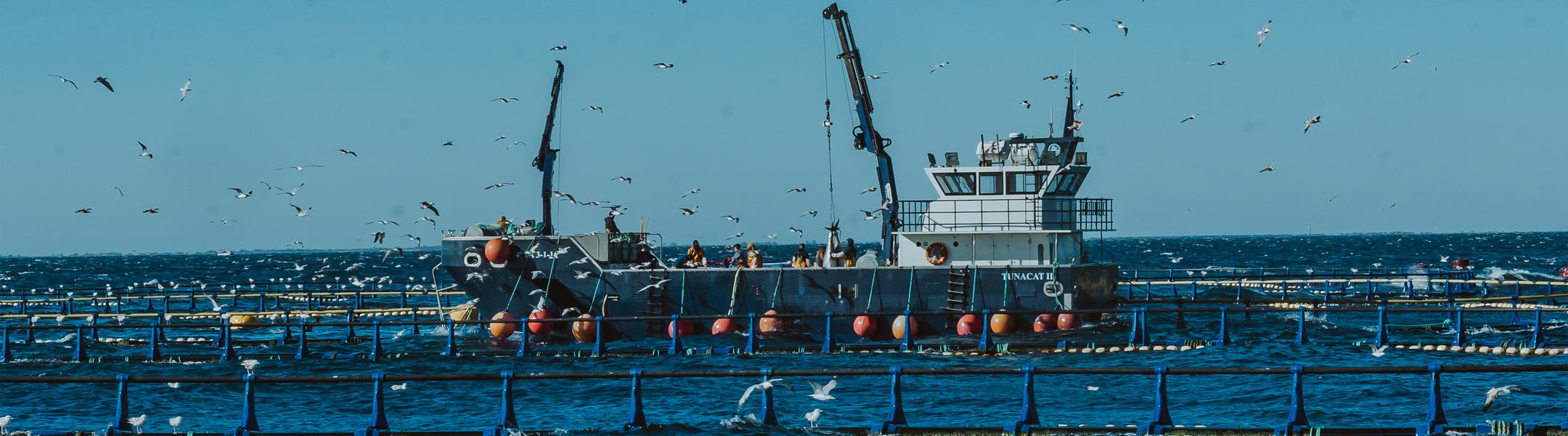
Wild Bluefin tuna is used for fattening purposes. During the season, wild Bluefin tuna are caught using purse-seine nets or the traditional Tuna trap. The tuna are then transferred to tanks, where they are fattened with frozen mackerel, squid, and herring. Tuna are fast-growing fish, and under ideal conditions, they can increase their weight by 60% per year.
Nutrition & Culinary
The semi-farmed—or rather, fattened—Bluefin tuna has a high fat content, making it richer than wild tuna. Its flavor is much more intense, but the high fat content also makes this farmed variety more delicate. Fattened Bluefin tuna is particularly well-suited for high-end Japanese cuisine. The belly section, known as Toro, is the fattiest and most prized part of this tuna. Akami, on the other hand, is deep red, less fatty, and slightly creamier in texture.
